

What Happens After You List Your First Mystery Bag on Snibbl
Most food businesses accept surplus as a cost of doing business. Prepared food that doesn’t sell, overproduction to avoid stockouts and unpredictable demand all lead to waste at the end of the day. In busy locations, especially food courts and high-footfall areas, this problem is amplified by fluctuating customer flow and peak-hour uncertainty. At the same time, customers are becoming more conscious about food waste and sustainability, while also searching for affordable ways to eat through searches like restaurants near me, food court near me or quick eat-and-drink restaurant options.
Despite this shift in consumer behavior, many restaurants still rely on informal and reactive methods to handle surplus. Food is thrown away, given to staff or discounted at the last minute in ways that are inconsistent and difficult to track. These approaches rarely provide clear data, predictable recovery or long-term operational improvement. In some cases, repeated end-of-day discounting can also hurt brand perception, training customers to wait for cheaper prices rather than ordering at full value.
Snibbl fills this gap by creating structured, predictable ways to recover value from surplus through Mystery Bags, Dining and Saver Box. Instead of treating surplus as a loss, restaurants can turn it into a managed output that reduces waste, improves margins on unsold food and aligns daily operations with changing customer expectations around sustainability and value. Importantly, this happens without disrupting core pricing, dine-in experience or kitchen workflows.
1. From Unplanned Waste to a Structured Closing System
Most restaurants treat surplus as inevitable rather than measurable. Unsold food is absorbed as a loss with little visibility into patterns or causes. This limits the ability to improve production planning or reduce waste in a meaningful way. After listing on Snibbl, partners begin to treat surplus as an actively managed category through Mystery Bags, Saver Box and Dining. Restaurants can estimate surplus more accurately, identify which items go unsold or underperform during certain hours and use that information to improve prep levels, staffing and purchasing. Over time, clear patterns emerge around specific menu items, time slots and demand gaps. This allows teams to refine batch sizes, adjust late-day prep and make data-backed decisions instead of guessing.
This shift is especially important for outlets in food courts and high-footfall locations where demand fluctuates quickly. When customers search food court or food court near me, traffic can change with little notice. Snibbl Dining also helps convert slow periods into usable demand by bringing in diners during off-peak hours, which reduces idle capacity and lowers the risk of overproduction later in the day. Even small improvements in forecasting, surplus handling and off-peak utilization can reduce ingredient waste and operating costs over time. Closing routines also become more structured. Surplus recovery becomes part of the closing checklist. Staff assess surplus at a set time, group eligible items for Mystery Bags or Saver Box and separate recoverable food from waste. This creates consistency across shifts and reduces rushed end-of-day decisions.
Large brands such as Subway, KFC, McDonald’s, Dunkin Donuts and Krispy Kreme rely on standardized procedures to manage costs and inventory. Independent restaurants benefit from applying similar structure, especially with fresh food bowls, bakery items and ready-to-eat meals. The result is a calmer, more predictable and more financially efficient operation across both service hours and closing.
2. Dining, Saver Box and Mystery Bags: Surplus Recovery Beyond Closing Time
Not all surplus happens at closing. Some comes from unsold food at the end of the day, some from overproduction and some from underused capacity during slow hours. Snibbl supports all of these through three formats: Mystery Bags, Dining and Saver Box. Each is designed for a different type of surplus and operational need.
Mystery Bags: Structured Recovery for End-of-Day Food
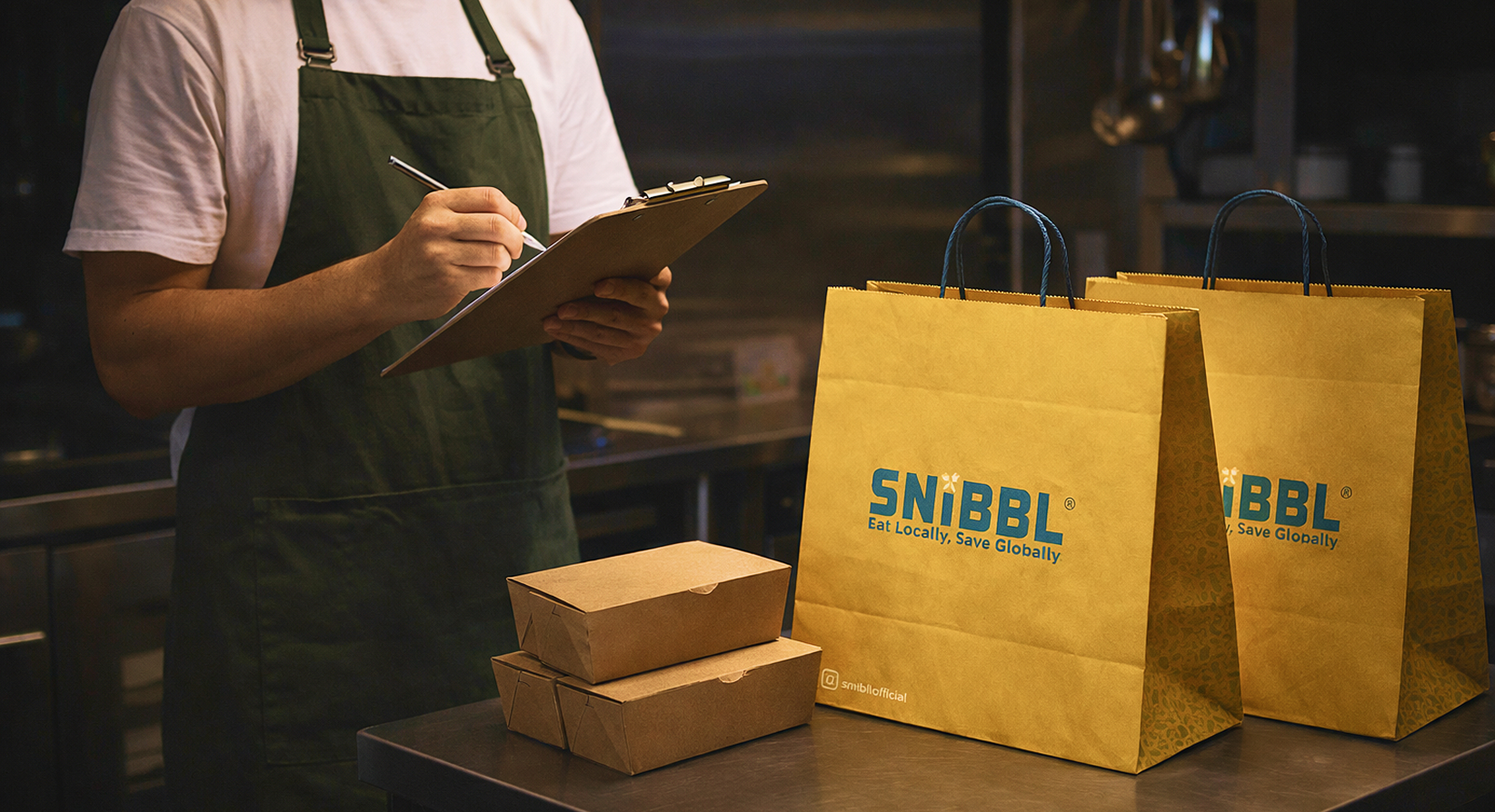
Mystery Bags are designed for freshly prepared food that remains unsold at closing. This includes prepared meals, bakery items, food bowls and other ready-to-eat products. Restaurants do not need to list exact items which gives kitchens flexibility while still recovering value. These help:
- Create a consistent closing routine
- Reduce last-minute waste decisions
- Recover revenue from food that would otherwise be discarded
Snibbl Dining: Filling Off-Peak Capacity
Snibbl Dining helps restaurants use slow hours more effectively by bringing in customers during off-peak times. This improves kitchen and staff utilization and reduces the need for overproduction later in the day. Dining is useful when:
- Tables are empty during slow periods
- Fixed costs remain high regardless of demand
- Kitchens have available capacity
Saver Box: Predictable Recovery for Specific Items
Saver Box is designed for surplus that is easy to group and clearly define. Restaurants can offer specific types of food so customers know what they are getting. Saver Box works well for:
- Pre-packed meals
- Bakery and dessert items
- Grab-and-go food bowls
- Short shelf life products
3. How Surplus Recovery Becomes a Daily Operating Process
For many restaurants, sustainability stays at the level of messaging. It appears on menus, websites or social media but it is not built into daily kitchen and closing processes. Waste still happens in the same way and surplus is still handled informally. There is often no clear link between sustainability goals and actual operational behavior. Once Snibbl is integrated, sustainability becomes part of the daily workflow rather than a separate initiative. Surplus recovery is no longer something that happens occasionally or inconsistently. It becomes a defined step in production, service and closing routines. In practice, this changes the daily flow inside the restaurant.
During service, kitchens become more aware of batch sizes and production timing because surplus can be recovered instead of written off. Teams are more comfortable preparing for demand because they know excess food has a recovery path through Mystery Bags or Saver Box. This reduces the stress of choosing between running out of food. During slow periods, Snibbl Dining helps bring in additional diners, improving table utilization and kitchen productivity. Instead of slow hours being pure lost time, they become an opportunity to generate revenue and smooth demand across the day. At closing, surplus is assessed in a structured way. Eligible food is grouped into Mystery Bags or Saver Boxes. Staff follow a consistent process instead of making ad hoc decisions about what to throw away, give to staff or discount informally. This makes closing more predictable and reduces friction for teams.
Over the course of a week, these small changes compound and restaurants typically see:
- A measurable reduction in daily food waste
- Consistent recovery from items that previously had zero value
- Better visibility into which items overproduce
- Lower effective cost per sold meal due to recovered surplus
For example, if a kitchen was previously discarding a few trays of prepared food, bakery items or food bowls each day, even partial recovery through Snibbl can turn a recurring loss into incremental revenue. Across a week, this can mean saving several kilograms of food and recovering meaningful costs that would otherwise be written off.
Just as importantly, this creates data and awareness. Managers can see patterns, adjust prep levels and reduce overproduction at the source. Over time, this leads to lower ingredient waste, more accurate forecasting and better margin control. From an end-of-day strategy perspective, Snibbl shifts surplus from being an unavoidable problem to being a managed operational variable. Instead of reacting to waste, restaurants plan for recovery. Instead of losing value, they recapture part of it. Instead of talking about sustainability, they practice it in ways that directly affect costs, margins and daily workflows. This is where sustainability stops being a marketing message and becomes part of how the business actually runs.